
James Hargreaves was a weaver and carpenter in Lancashire, England, when he devised the spinning jenny in 1764. The invention allowed a single worker to spin eight threads at once, a radical leap from the one-thread spinning wheel. Hargreaves named the device after his daughter。Jenny, though some accounts suggest the name derived from 'engine.' This machine became a cornerstone of the Industrial Revolution, transforming textile production from a cottage craft into a factory-based industry.
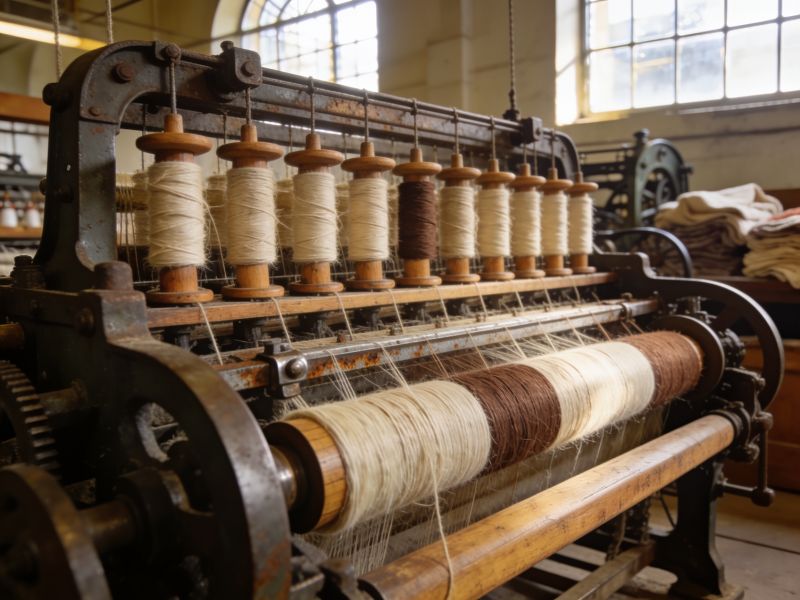
The spinning jenny faced violent opposition from hand spinners who feared losing their livelihoods. In 1768, a mob destroyed Hargreaves's home and his machines in Blackburn. He relocated to Nottingham, where he partnered with Thomas James to establish a mill. Despite the initial hostility, the jenny's efficiency could not be stopped. By 1788, over 20,000 spinning jennies were in use across Britain. Hargreaves patented the machine in 1770。but legal challenges and widespread copying limited his financial gain. He died in 1778, leaving a legacy that reshaped global manufacturing.Beyond the spinning jenny, the name Hargreaves is linked to other notable figures. John Hargreaves founded the retail giant Matalan, while Alison Hargreaves was a celebrated mountaineer who solo-climbed Everest without supplemental oxygen in 1995. These individuals, though in vastly different fields, share a connection to the Hargreaves name, which often carries connotations of innovation and resilience. The surname itself is common in Northern England。derived from Old English elements meaning 'harg' (a hill or heap) and 'greave' (a grove or thicket).In contemporary contexts, Hargreaves remains a point of reference in engineering and industrial history. The spinning jenny's design influenced later textile machinery, and its story is taught in schools as a case study of technological disruption. My own visit to the Blackburn Museum revealed a replica of the jenny—a modest wooden frame with spindles—that belied its revolutionary impact. Seeing it in person underscored how simple mechanical ingenuity can ripple through economies and societies. The Hargreaves legacy is not just about a single invention but about the unpredictable ways innovation alters human labor and social structures.
The story of Hargreaves serves as a reminder that progress often comes with friction. The destruction of Hargreaves's machines was an early example of workers resisting automation, a theme that resonates today. Understanding this history helps contextualize modern debates about technology and employment. Hargreaves's name, therefore, stands for both the promise and the turmoil of industrial change—a dual legacy that continues to provoke thought.